61, 76 or 88 keys?
A full piano has 88 keys. Smaller keyboards cut keys from both ends, which beginners rarely need.
| Size | Good for | Keep in mind |
|---|---|---|
| 61 keys (5 octaves) | First year, pop songs, chords, small spaces | Some classical pieces need more range |
| 76 keys | More range without the size of a full piano | Fewer models to choose from |
| 88 keys (full size) | Classical music, lessons, long-term learning | Bigger, heavier and usually more expensive |
Key action: how the keys feel
- Unweighted (synth-action) keys are light and springy. Easy to press, but they don’t prepare your fingers for a real piano.
- Semi-weighted keys add some resistance. A middle ground for keyboards.
- Weighted or hammer-action keys feel like a piano: heavier in the low notes, lighter in the high ones. Found on digital pianos.
Touch-sensitive keys: the must-have
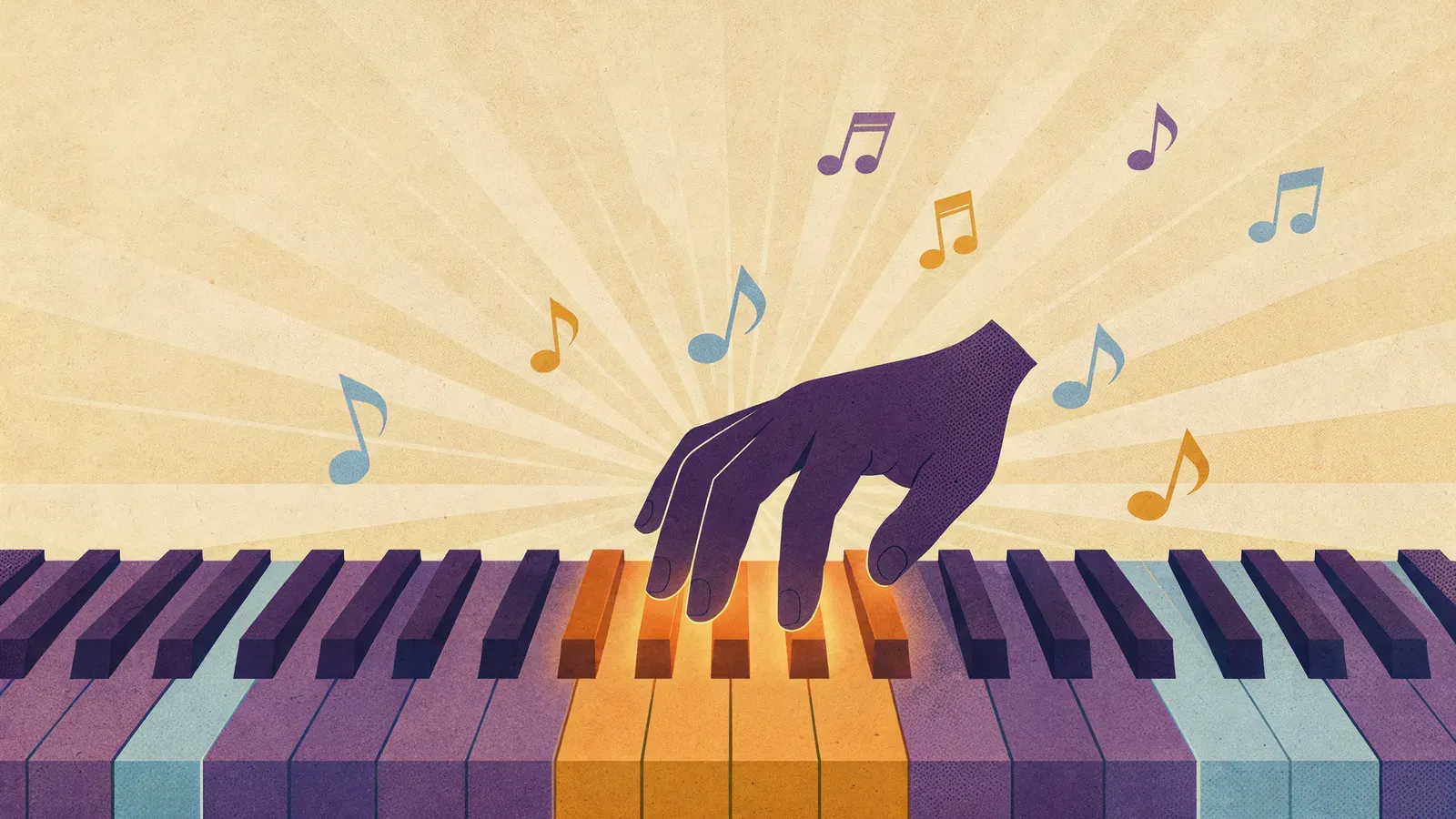
Touch-sensitive (or velocity-sensitive) keys play louder when you press harder and softer when you press gently, like a real piano. Without them every note is the same volume, and you can’t learn to play with expression. Avoid keyboards without this feature, even for a first instrument.
Other features to check
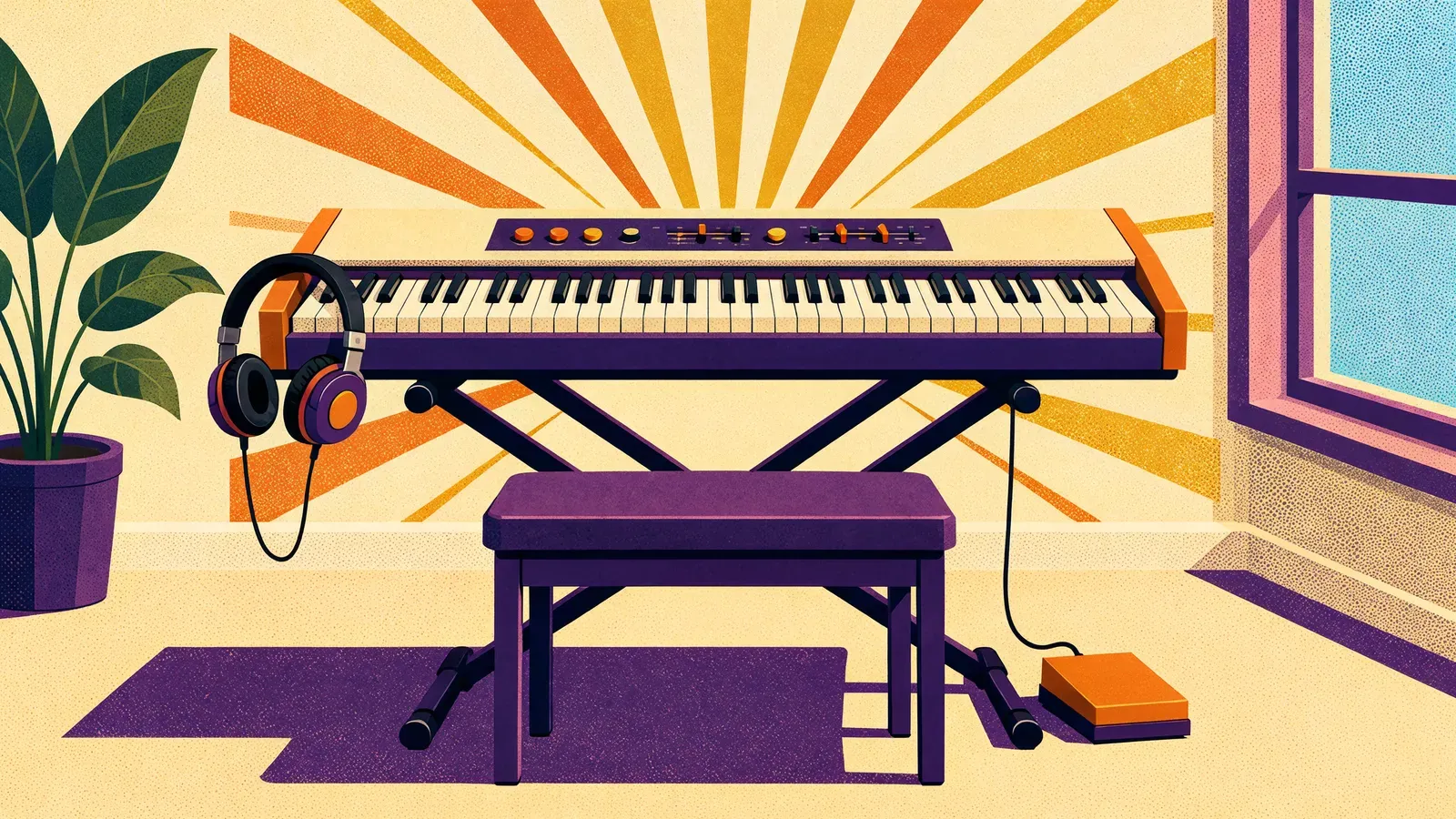
- Sustain pedal input: a socket for a pedal that lets notes ring. Many songs need it, and a pedal is a cheap add-on.
- Polyphony: how many notes can sound at once. Look for at least 64 notes; 128 or more is better when you use the pedal.
- Headphone output: so you can practice at any hour without disturbing anyone.
- USB or Bluetooth MIDI: connects the keyboard to apps on a phone, tablet or computer, so they can hear exactly which keys you press.
- A good piano sound: you’ll mostly use one sound, so make sure the main piano sound is pleasant. Hundreds of other sounds are a bonus, not a reason to buy.
Keyboard, digital piano or acoustic piano?
| Type | Keys | Best for |
|---|---|---|
| Portable keyboard | Usually 61 light, unweighted keys | Trying piano on a budget |
| Digital piano | 88 weighted keys that feel like a piano | Serious practice, lessons, classical |
| Acoustic piano | 88 keys with real hammers and strings | The real thing, if you have space and can tune it |
A beginner’s buying checklist
- At least 61 full-size keys.
- Touch-sensitive keys.
- A sustain pedal input (and a pedal).
- At least 64-note polyphony.
- Headphone output.
- USB or Bluetooth MIDI for learning apps.
- A stand and bench, so you sit with your forearms level with the keys.
Start before you buy
You don’t need an instrument on day one. Learning where the notes are and playing a few easy songs on an on-screen keyboard tells you whether you enjoy piano before you spend money, and it means you can play something the day your keyboard arrives. Our guide to how to learn piano has a simple plan to follow.